 The Sourdough
 Troubleshooting
Why Is My Sourdough Dough So Sticky? Causes and Fixes
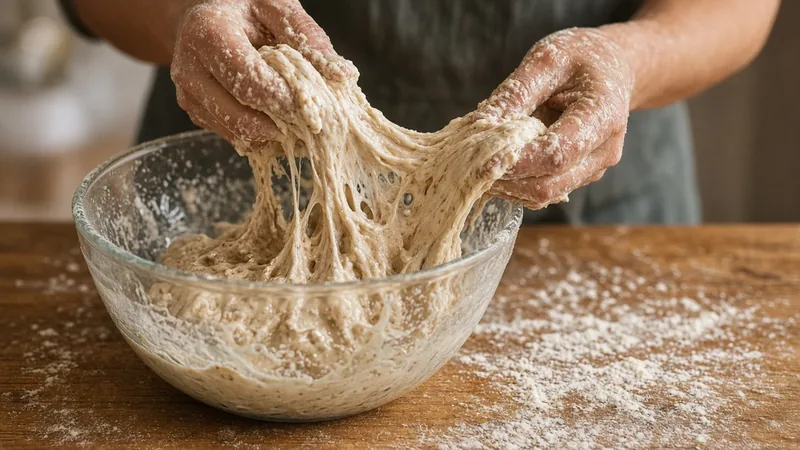
Sourdough dough is supposed to be a bit sticky. Most sourdough recipes are wetter than typical sandwich bread dough, and that extra water is part of what gives an open, moist crumb. But there's a difference between dough that's tacky and dough that sticks to everything and won't hold a shape.
Normal sticky vs problem sticky
- Normal: sticky right after mixing, then becomes smoother, stronger and less sticky over the stretch and folds. It holds a shape after pre-shaping.
- A problem: stays soupy or gets stickier as time goes on, tears easily, and spreads flat as soon as you shape it.
Common causes
1. The hydration is too high for your flour
Flours absorb different amounts of water. A 75 to 80% hydration recipe written for a strong bread flour can feel like batter with a weaker flour. If you're starting out, a dough around 65 to 70% is far easier to handle. Our basic sourdough recipe uses 70%.
2. Lower-protein flour
All-purpose or lower-protein flours build less gluten, so the dough stays slacker. Bread flour, or swapping part of the flour for it, usually helps. More in our flour guide.
3. Not enough gluten development
Gluten is what turns sticky dough into a smooth, stretchy one. If you skip or rush the stretch and folds, the dough may never firm up. Do a few sets of stretch and folds, or coil folds, during the first part of bulk fermentation.
4. Over-fermentation
As dough ferments too long or too warm, the gluten starts to break down and the dough becomes slack, sticky and hard to shape. If the dough was manageable earlier and became sticky late in bulk, this is a likely cause. See overproofed vs underproofed.
5. A very warm kitchen
Warm dough ferments faster and feels softer and stickier. Use cooler water when mixing on hot days, and check on the dough sooner.
6. Lots of whole grain or rye
Rye in particular makes a sticky, paste-like dough that never becomes stretchy like wheat dough. That's normal for rye; handle it with wet hands and a scraper.
7. Adding the water too fast, or measuring by volume
Cups of flour vary a lot in weight, so the real hydration can be very different from what the recipe intended. A kitchen scale removes that variable. Holding back some water and adding it only if the dough feels stiff also helps.
How to handle sticky dough
- Wet your hands, not floured hands, when doing stretch and folds. Wet hands slide off the dough.
- Use a bench scraper for turning out, pre-shaping and moving the dough.
- Use only a light dusting of flour when shaping. Lots of extra flour can create seams and streaks in the crumb.
- Rest it. If the dough is fighting you, cover it for 10 to 20 minutes and try again.
- Use rice flour on the banneton so the shaped dough releases cleanly.
Frequently asked questions
Should I add more flour to sticky sourdough dough?
A small amount is fine if the dough is clearly too wet, but it's usually better to build strength with folds and lower the water next time than to keep adding flour.
Why is my sourdough sticky after baking?
A sticky or gummy crumb after baking is usually from under-fermentation, underbaking or slicing too soon. See why is my sourdough dense.
What hydration should a beginner use?
Many beginners find 65 to 70% hydration easiest. Once you're comfortable shaping it, you can increase the water a little at a time.